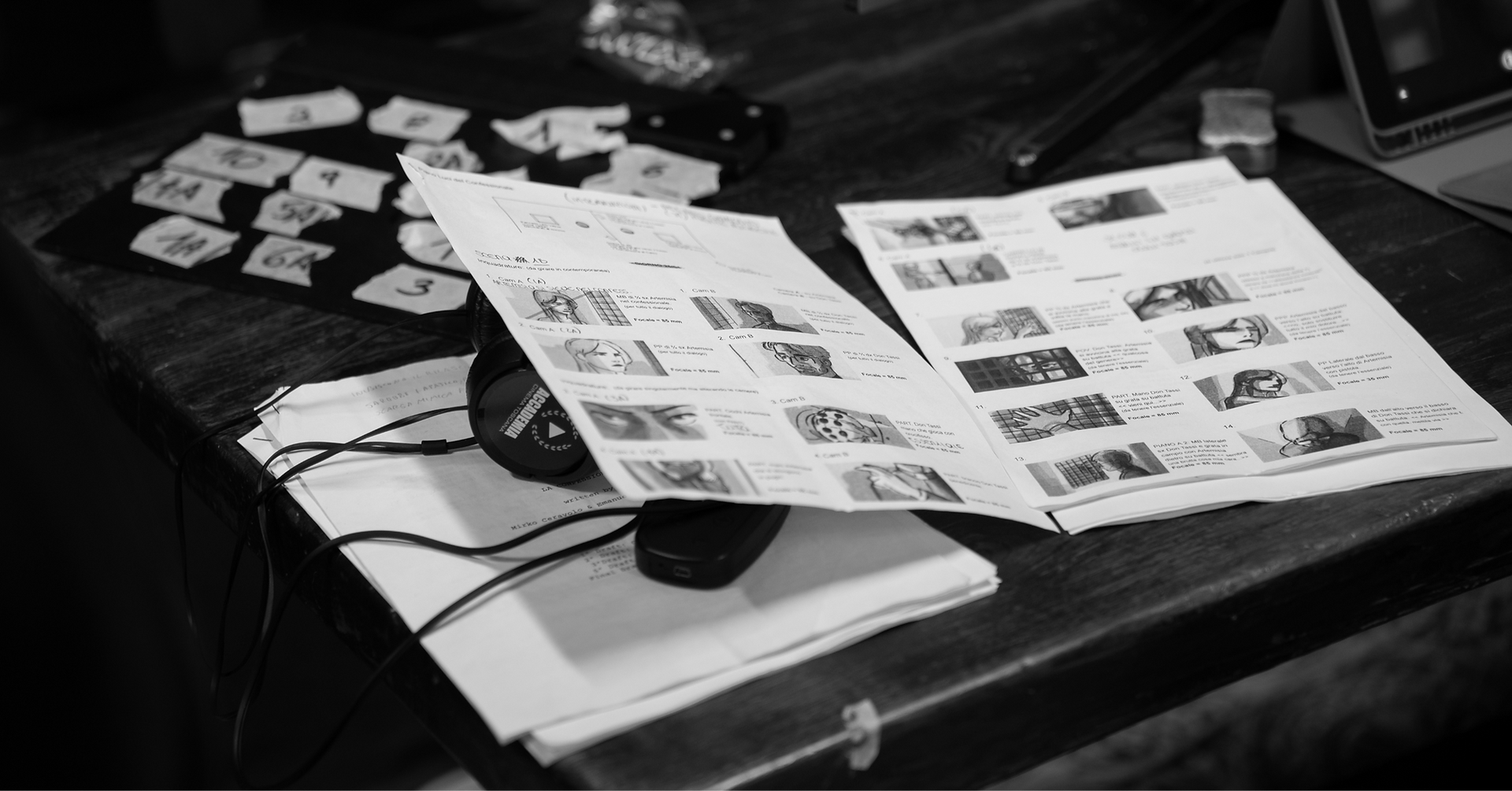


The physics of the set: how technology is rewriting the film professions.

Film is a heavy industry, a profession of obsession, precision, and sweat. Today, those who decide to step behind the lens find themselves faced with a profoundly changed market. There's no longer room for naive romanticism or improvisation. Talent alone is no longer enough: it must be built on structure, technical expertise, and economic awareness.
The real impact: the numbers chain
To understand the backbone of this world, you need to look at the data. The latest economic impact report produced by Cassa Depositi e Prestiti (CDP) for ANICA debunks the idea that the audiovisual sector is a welfare state. The numbers say the opposite: every single euro invested in production generates 3.54 in the real economy , boosting transportation, logistics, construction, and local craftsmanship. In Italy, national feature films alone generate over 800 million euros a year, supporting approximately 180,000 jobs . It's an anomalous workforce for our country: the average age is drastically lower than in other sectors, technical qualifications are extremely high, and digital literacy is the norm, not the exception. Behind the camera is an army of professionals managing enormous budgets with virtually zero margins for error.
The End of the Jack of All Trades and the Digital Transition
The production boom of recent years, fueled by the initial explosion of platforms, has undergone what the European Audiovisual Observatory calls the Streamer Correction. Netflix, Prime Video, and other major players have cut their titles to focus their budgets on fewer projects, but with ruthless technical standards. This shift has eliminated the role of the all-rounder filmmaker from the market. Structured productions aren't looking for those who can do a bit of everything; they're looking for vertical specialists. Reports from the Society of Motion Picture and Television Engineers ( SMPTE ) draw a clear line: the set has become a hybrid environment. With the advent of Virtual Production and volumetric LED walls, the work has shifted forward. Directors and Directors of Photography today must master the physics of real light and, at the same time, real-time rendering engines like Unreal Engine. Positions like the Virtual Production Supervisor or the DIT (Digital Imaging Technician) are no longer support technicians, but rather guarantors of the film's aesthetic quality. The same goes for post-production. Artificial Intelligence isn't leaving anyone behind, but it's forcing a leap in quality. AI VFX Editors use algorithms to eliminate hours of mechanical work (frame cleanup, rotoscoping), leaving the creative control and management of massive data flows to the professional.
Ethical standards and state constraints: the new rules of the game
Working backstage today also means dealing with extremely rigid legislation and work ethics. Sets are no longer safe zones. Emotional and physical safety on set has led to the hiring of an Intimacy Coordinator , a key figure in managing sensitive scenes. From an economic standpoint, the ecological transition has become a survival constraint. The Ministry of Culture's (MiC) Cinema Fund distribution decree allocates approximately €696 million (including €412 million for the Tax Credit), but the taps are only opened if the production complies with European sustainability standards. The Green Production Manager is the key figure in this transition: he or she coordinates logistics, materials, and consumption on set. Those with this technical expertise now have direct access to the job.
Visual identity as a professional brand
In such a vertical market, even the way you present yourself changes. For a director, an editor, or a camera operator, personal branding isn't about showing off on social media but about language. Building your portfolio means reverse engineering your visual references. You don't copy an actor's positioning; you dismantle the shot. You analyze the direction of the key light , the contrast ratio, the choice of lens, the density of blacks in color correction. That's your technical signature. It's the only authentic way to tell the market: "This is my visual standard, this is how I manage a shot, this is my signature."
The substance of the craft
Making films behind the scenes remains an act of faith and visceral passion. But the authenticity of this work today inevitably depends on the discipline of code, machinery, and numbers. Those who want to inhabit the backstage must get their hands dirty with the most advanced technology and accept the rules of a ruthless but meritocratic industry. A poetic vision helps survive the nights on set, but it's technical expertise that keeps the machine running.


Comments