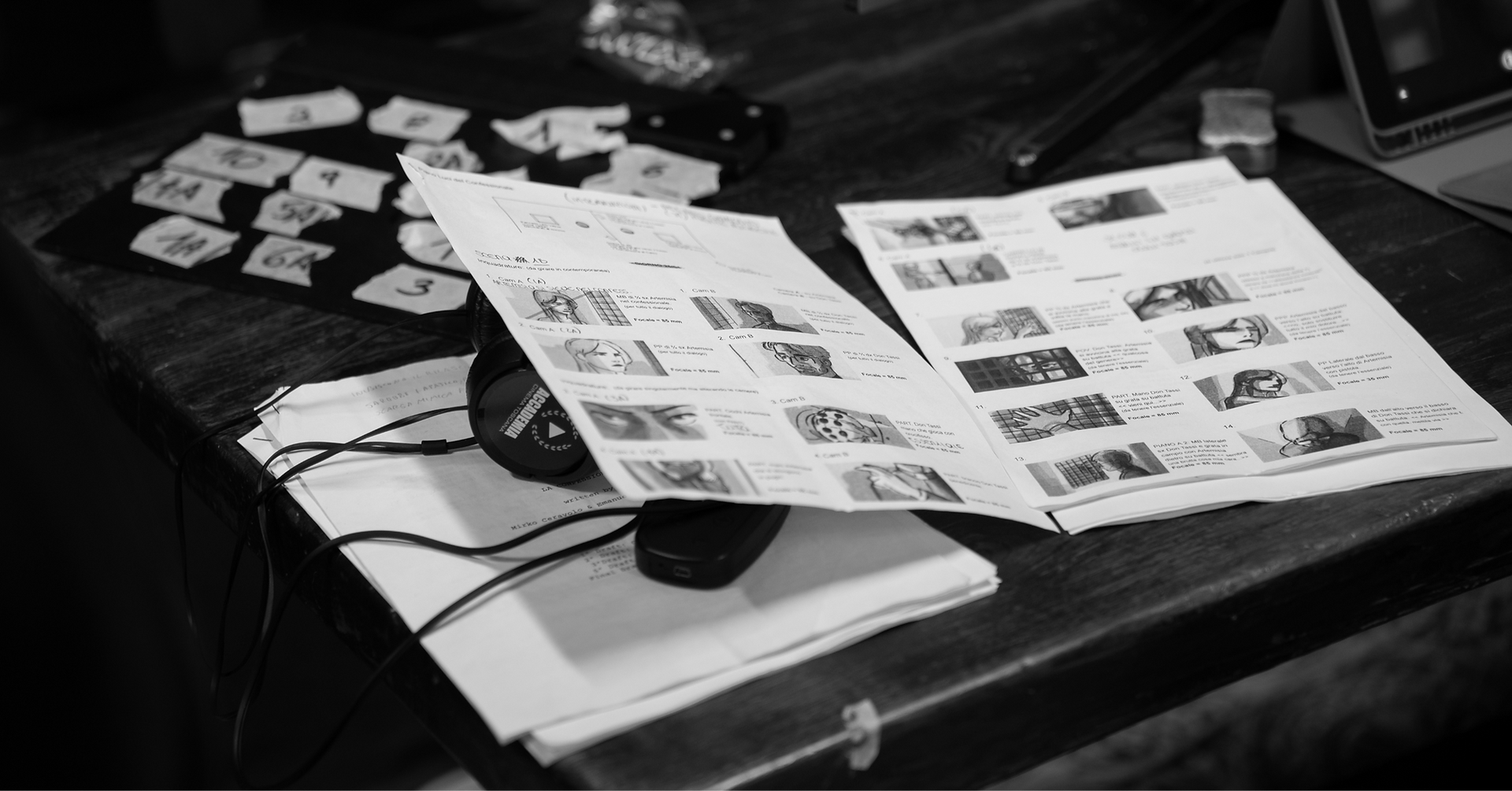


Regimes of the gaze: direction as choice

It's easy to recognize a well-made film; it's rarer to notice the moment a film shifts our perspective. It happens when the image ceases to be merely what it shows and becomes what it makes us see: time shifts density, space seems to have a purpose, and our gaze returns to a precision we had forgotten. That is the place of direction: not a technical department, but an invisible discipline that transforms a story into an experience and, more radically, an experience into knowledge.
Directing, ultimately, doesn't execute: it decides. If the screenplay is a blueprint for the world, directing is the act that makes it perceptible: in duration, light, distance, rhythm, silence. It's a fragile transition because it doesn't allow for neutrality: every choice, even the most subtle, formalizes an idea of reality. This is why every film is an act of translation: not between languages, but between states of experience. The director translates from the abstract to the concrete, from thought to image, from emotion to its sensory imprint. And like every translation, it entails a loss and a gain: the comfortable vagueness of the idea is lost, while the risky precision of form is gained.
A simple and decisive consequence follows from this: the camera doesn't "observe," it selects. Each shot includes and excludes, creates a field and an off-field, establishes what deserves center stage and what can remain marginalized. In some films, the gaze is guided like a strategy: it makes you want to know, it spreads suspicion, it builds anticipation. In others, on the contrary, the image compels you to stay: duration weighs, time doesn't flow but insists, and attention becomes almost a test. In both cases, form isn't decoration: it's thought made visible. Staging, point of view, duration, and editing don't accompany meaning: they produce it. Direction is the grammar through which experience acquires meaning.
If directing is a grammar, cinema doesn't reproduce reality: it questions it. It's not about seeing more, but about seeing differently. There is a cinema that brings order to the visible, transforming it into geometry and obsession; and a cinema that, conversely, brings it closer to the point of intimacy, finding meaning in the minutiae we normally treat as noise. Two opposing paths, the same challenge: changing the quality of our gaze.
But the director doesn't reign alone. Cinema is a collaboration, a combination of independent skills: photography, sound, editing, acting, set design, production. Authorship, here, isn't ownership: it's responsibility. It's the ability to coordinate diverse voices without canceling them out, transforming plurality into a legible direction.
And from this responsibility also arises ethics, not as a moral adjunct, but as an inevitable effect of form. Distance determines intimacy or judgment; duration decides listening or consumption; point of view decides access or exclusion. At the end of a great vision, not only images remain: a different regime of gaze, a new measure of time, another way of attributing meaning. This is the gift of directing: not persuading us, but reconfiguring us, teaching us without proclamations that in the very act of looking, a way of thinking is already at work.


Comments